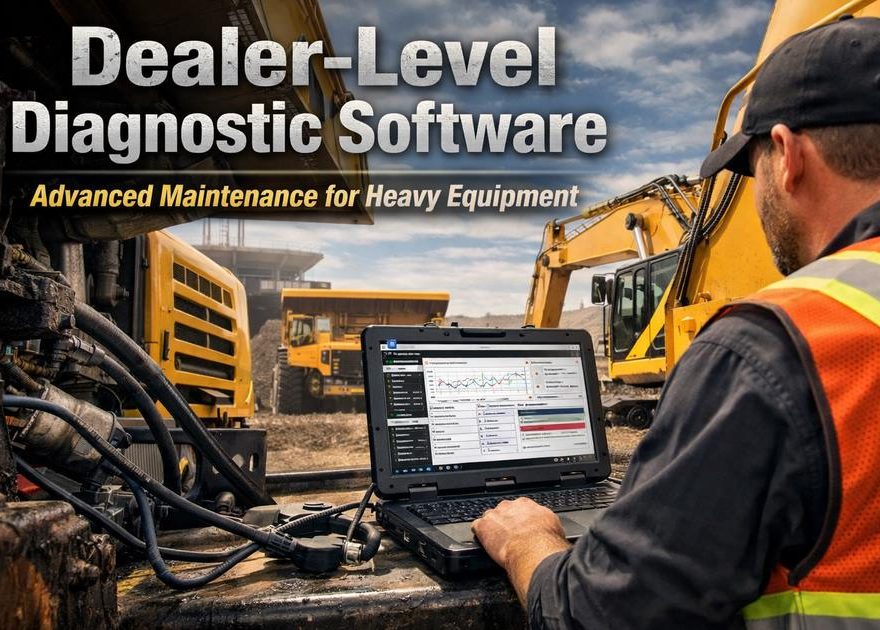
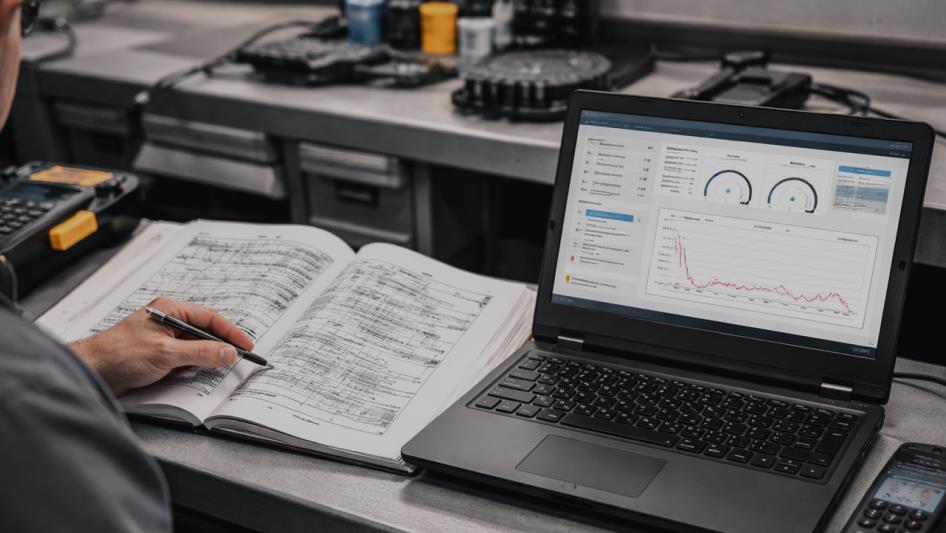
In the modern industrial landscape, the “grease monkey” of the past has evolved into a sophisticated systems technician.
Heavy-duty equipment—ranging from excavators and bulldozers to massive mining haul trucks—has transitioned from purely mechanical assemblies into complex, integrated networks of Electronic Control Units (ECUs). At the heart of maintaining these behemoths is dealer-level diagnostic software, a specialized category of tooling that provides deeper access than generic scanners, allowing for bidirectional testing, parameter re calibration, and proprietary fault code analysis.
Dealer-level diagnostic software refers to the proprietary programs developed by Original Equipment Manufacturers (OEMs) such as Caterpillar (CAT ET), John Deere (Service ADVISOR), and Volvo (Tech Tool). Unlike standard On-Board Diagnostics (OBD) found in passenger vehicles, heavy equipment utilizes the J1939 and J1708 data link protocols. Dealer-level tools are essential because they allow technicians to perform “forced” regenerations of Diesel Particulate Filters (DPF), program new injectors, and update firmware—tasks that are often locked out of universal aftermarket tools.
The Architecture of Heavy Equipment Electronics
To understand why dealer-level software is necessary, one must understand the architecture of the machine. Modern heavy equipment operates on a Controller Area Network (CAN bus). This system allows various modules—the Engine Control Module (ECM), Transmission Control Module (TCM), and Hydraulic Control Module—to communicate in real-time.
When a fault occurs, the system generates a Diagnostic Trouble Code (DTC). While a generic tool might read a basic code, dealer-level software provides the “freeze frame” data—a snapshot of all sensor readings at the exact millisecond the fault occurred. This level of detail is critical for intermittent electrical failures that are otherwise impossible to replicate in a shop environment.
Key Capabilities of Dealer-Level Tools
The primary advantage of dealer-level software lies in its bidirectional functionality. This means the software doesn’t just “listen” to the machine; it “talks” to it.
- Parameter Programming:Technicians can adjust engine speed limits, idle shutdown timers, and fuel maps to optimize the machine for specific altitudes or workloads.
- Cylinder Cutout Tests:By using the software to manually disable one fuel injector at a time while the engine is running, a technician can identify a misfiring cylinder without physical teardown.
- Hydraulic Calibration:In equipment like excavators, the software calibrates the solenoid valves that control fluid flow, ensuring smooth and precise movement of the boom and bucket.
- Emissions System Management:With strict Tier 4 Final regulations, managing Selective Catalytic Reduction (SCR) and DPF systems is a daily requirement. Dealer software allows for manual overrides to clean these systems, preventing the machine from entering “limp mode.”
Why Universal Diagnostic Tools Fall Short
Universal scanners are useful for basic fault reading, but they are limited by design.
They often cannot:
- Access OEM-specific fault logic
Perform advanced calibrations
Initiate forced regenerations
- Update ECU software
- Interface with proprietary communication protocols
As a result, technicians may see fault codes without understanding the root cause.
Dealer-level diagnostic software fills this gap by providing full system visibility.
How OEM Diagnostic Software Communicates with ECUs
Modern heavy-duty equipment uses multiple ECUs that communicate through CAN,J1939, and manufacturer-specific networks.
Dealer software acts as the interpreter between the technician and the machine by:
- Establishing secure communication with each ECU
2.Translating rawfault data into readable diagnostics
- Providing guided troubleshooting routines
4.Executing calibration and reset commands
This structured workflow reduces guesswork and improves diagnostic accuracy.
Choosing the Right Diagnostic Software for Your Operation
Selecting the correct diagnostic platform depends on:
- Equipment brand and model range
- Engine manufacturer
- Required programming and calibration functions
- Software update availability
- Hardware interface compatibility
Many professional operations use multiple OEM platforms to support mixed fleets effectively.
FAQ
1. What is dealer-level diagnostic software for heavy equipment?
Dealer-level diagnostic software is proprietary software developed by equipment manufacturers such as Caterpillar, John Deere, and Volvo. It provides advanced access to machine ECUs, allowing technicians to perform diagnostics, calibrations, parameter programming, and software updates that are not available with generic scanners.
2. Why is dealer-level diagnostic software important for heavy equipment maintenance?
Heavy equipment uses complex electronic control systems. Dealer-level diagnostic software allows technicians to access detailed fault data, perform bidirectional testing, and calibrate components, which improves troubleshooting accuracy and reduces machine downtime.
3. What communication protocols are used in heavy equipment diagnostics?
Most heavy-duty equipment communicates using J1939, J1708, and CAN bus protocols. Dealer-level diagnostic software is designed to interpret these protocols and communicate directly with the machine’s electronic control modules.
4. What functions can dealer-level diagnostic tools perform?
Dealer diagnostic software can perform advanced functions such as reading and clearing fault codes, parameter programming, ECU firmware updates, hydraulic calibration, injector programming, and forced regeneration of diesel particulate filters (DPF).
5. Why can’t universal diagnostic scanners perform the same functions?
Universal diagnostic tools can read basic fault codes, but they typically lack access to OEM-specific data and programming features. Dealer-level software provides deeper system access, proprietary troubleshooting routines, and full ECU communication.
6. Which manufacturers provide dealer-level diagnostic software?
Major heavy equipment manufacturers provide their own diagnostic platforms, including Caterpillar Electronic Technician (CAT ET), John Deere Service Advisor, Volvo Tech Tool, and other OEM diagnostic systems designed specifically for their machines.